
Description
Camera Exposure
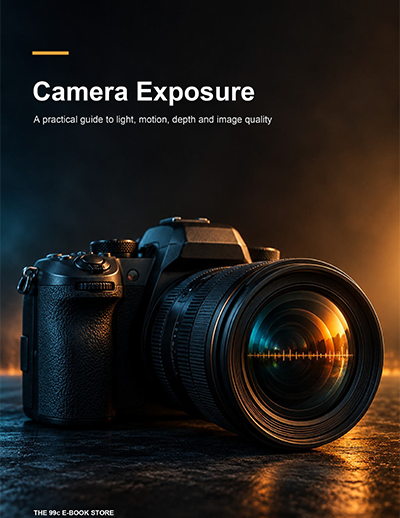
A good exposure is more than a photograph that looks bright enough. Aperture, shutter speed and ISO also control depth of field, motion and image quality. Camera Exposure explains these connected decisions in plain language, so beginners can choose settings for the photograph they want rather than chase the meter without a plan.
The guide begins with stops of light and the exposure triangle. It shows how a wider aperture admits more light and reduces depth of field, how shutter time changes both brightness and motion, and how higher ISO helps in limited light while increasing noise and reducing editing latitude. Equivalent-exposure examples show why several setting combinations can create similar brightness but different pictures.
You will also learn how Program, Aperture Priority, Shutter Priority and Manual mode divide the decisions between photographer and camera. Separate sections explain the light meter, exposure compensation, Auto ISO, metering patterns and exposure lock. Histogram and highlight-warning guidance helps you judge the recorded file instead of relying only on the rear-screen preview.
Practical scenarios cover portraits, moving subjects, landscapes, low light, snow and backlighting. Each scenario starts with the visual priority, then chooses the setting that controls it. A troubleshooting workflow helps identify whether a weak result came from exposure, motion, focus or limited dynamic range.
The guide is brand-neutral. Button names, mode labels and Auto ISO options vary by camera, but the exposure principles apply across common DSLR and mirrorless systems.




Reviews
There are no reviews yet.