
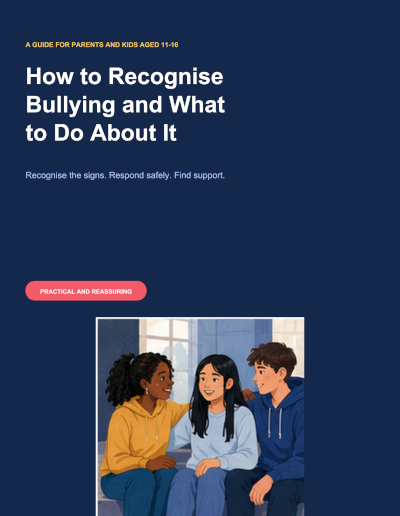
Description
A Practical Guide to Recognising and Responding to Bullying
Bullying can be obvious, but it can also be subtle, social, digital or difficult to prove.
How to Recognise Bullying and What to Do About It helps parents and young people understand what to look for and what to do next.
The guide is built around a simple principle: bullying should not be handled in isolation. It encourages young people to involve trusted adults and makes clear that immediate danger requires emergency help.
Understand What Bullying Means
The book defines bullying as unwanted behaviour that hurts, intimidates or controls, is usually repeated or likely to be repeated, and involves a real or perceived power imbalance that makes it difficult for the targeted person to stop it alone.
It also distinguishes bullying from ordinary conflict.
A disagreement between equally matched friends can still be painful, but it may require a different response from repeated behaviour involving fear, harm and power imbalance.


Reviews
There are no reviews yet.